
Our hardware
Hardware builtfor game servers
Game servers need fast cores, fast memory and fast disks. Every RAMShard server runs on AMD EPYC and Ryzen processors with DDR5 memory and NVMe SSD storage, behind always-on DDoS protection.
Built to run
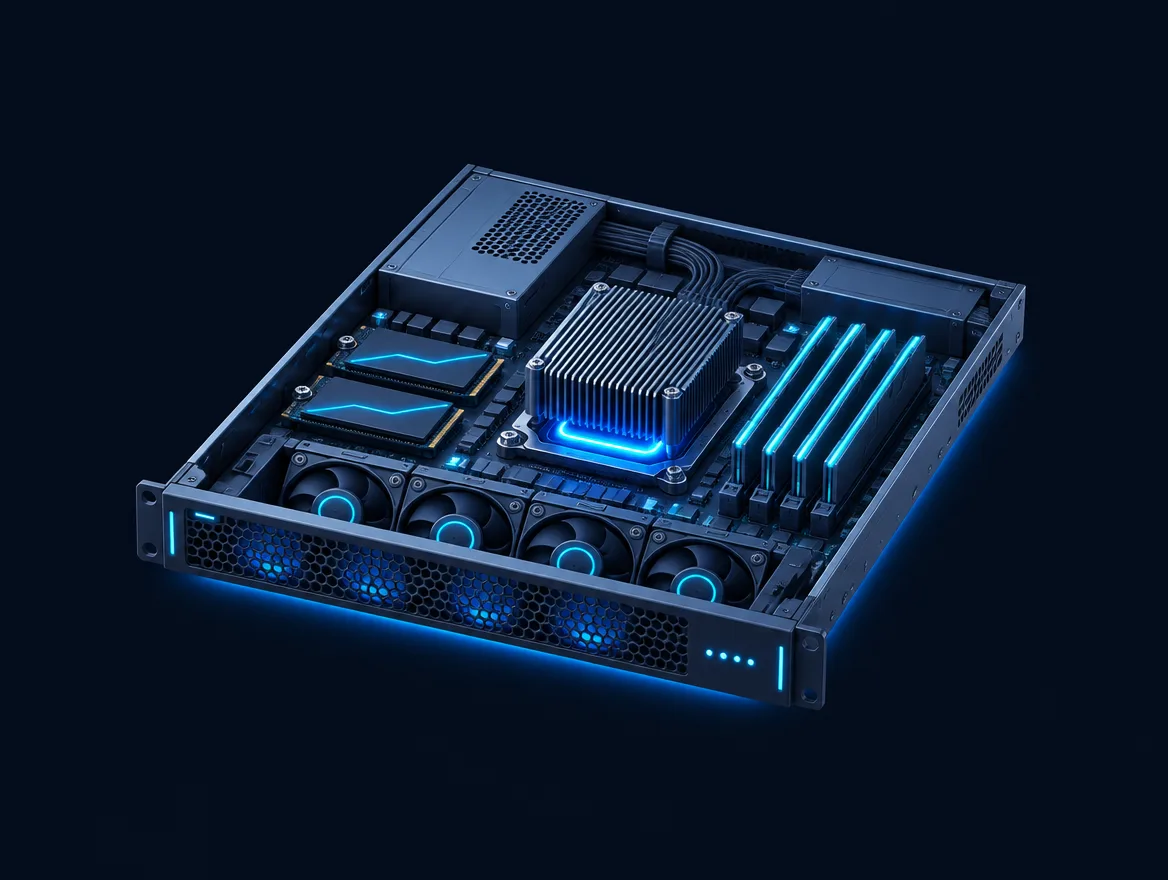




- Top clock speed
- 5.7 GHz
- Memory in every location
- DDR5
- SSD storage
- NVMe
- Fastest network port
- 25 Gbps
Inside every server
Four parts decide how your server plays. Here is what we put in each machine.

Processor
AMD EPYC and Ryzen
Up to 5.7 GHz
Current AMD processors chosen for single-thread speed, the figure game servers depend on most.
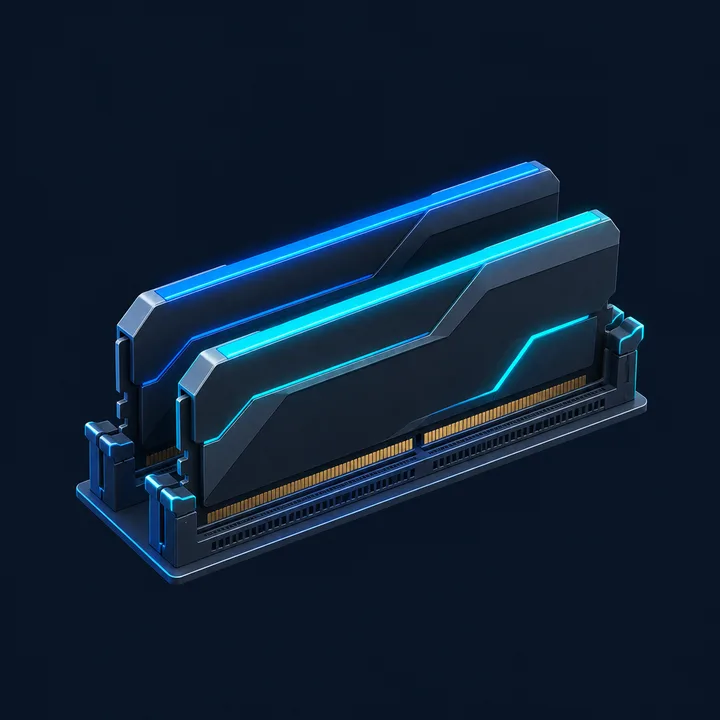
Memory
DDR5 RAM
In every location
The current memory generation. Your world, players and plugins live in RAM while the server runs.
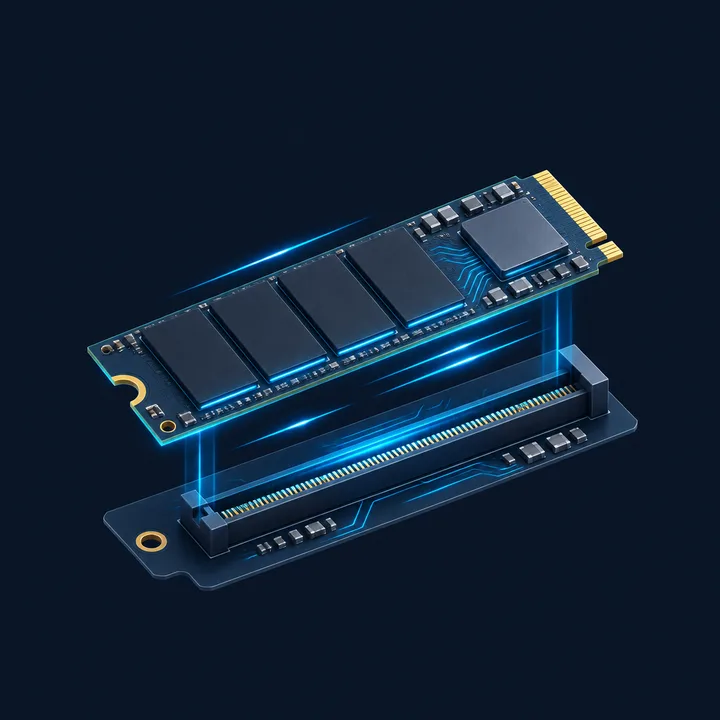
Storage
NVMe SSD
Lightning fast
NVMe drives read and write many times faster than SATA SSDs. Worlds load in moments, and saves finish without stalling the game.
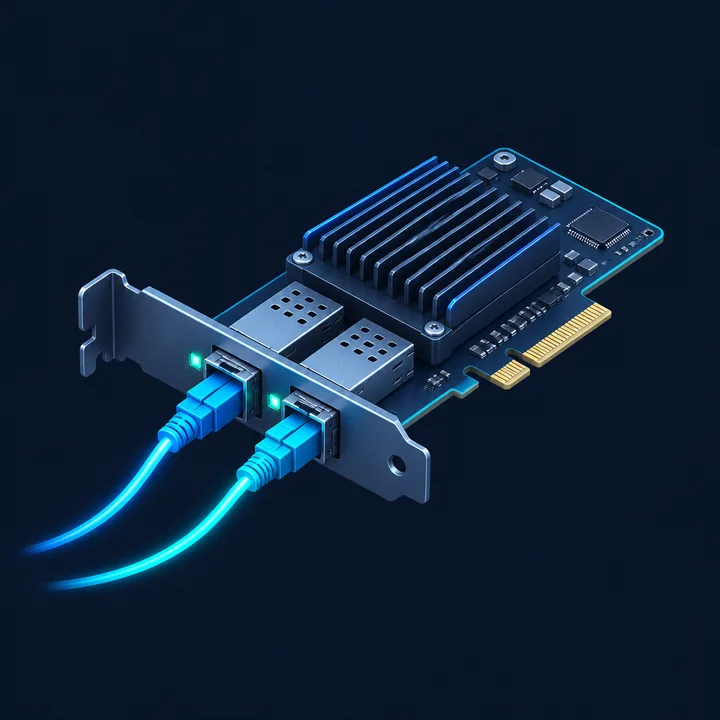
Network
Fast, protected ports
Up to 25 Gbps
Each machine connects through a 1 to 25 Gbps port, depending on the location, with DDoS protection always on.
What each game asks of the hardware
Different games lean on different parts. Our machines are built to cover all of them.
 Minecraft Single-thread speedThe world runs on one core at 20 ticks a second. Clock speed decides how many players, mobs and farms a world carries before it lags.
 Rust MemoryLarge maps and thousands of player-built pieces fill memory quickly, and the load grows through each wipe.
 RuneScape: Dragonwilds Fast storageA co-op survival world that saves as your party builds, crafts and fights. Fast storage and a quick core keep it responsive.
 Valheim Single-thread speedThe world simulation leans on a single core, so a fast processor keeps big bases and busy sessions smooth.
 Counter-Strike 2 Low latencyCompetitive matches depend on steady tick rates and low ping. A nearby location and a clean route keep hits consistent.
 Hytale Single-thread speedLarge generated worlds need headroom. A fast core and DDR5 memory keep exploring smooth as your world grows.




Built around single-thread speed
We pick processors for the one figure game servers depend on most: how fast a single core runs.
Our fastest processor
AMD Ryzen 9 9950X
This is the quickest chip in our fleet. It is a current-generation AMD processor built for single-thread speed, paired with DDR5 memory.
For your server that means shorter ticks, more headroom for players and plugins, and a world that stays smooth as it grows.
- Single-thread score
- 4,729
- Max clock
- 5.70 GHz
- Memory
- DDR5
Higher is better. The score is a single-thread benchmark result for this processor model.
- Top clock speed of 5.7 GHz
- DDR5 memory and NVMe SSD storage alongside it
- Chosen for game servers, where one fast core does most of the work
Why single-thread speed matters
Most game servers do their main work on one processor core. Minecraft runs its world 20 times a second, so each tick has 50 milliseconds to move every player, mob and machine.
A fast core finishes each tick with time to spare. A slow core runs over, ticks pile up, and players see rubber-banding and delayed block breaks. Adding more cores does not fix this. A faster core does.
- Processors chosen for clock speed, up to 5.7 GHz
- More players, mobs and plugins before lag sets in
- Paired with DDR5 memory and NVMe storage

Minecraft runs its world 20 times a second
A fast core
Each tick finishes well inside its 50 ms.
A slow core
Ticks run over, so the server falls behind and lags.

Survival worlds like Dragonwilds save to disk as you play
Typical top read speed by drive type
- NVMe SSD
- Up to 7,000 MB/s
- SATA SSD
- Up to 550 MB/s
- Hard drive
- Around 160 MB/s
Typical top sequential read speeds for each drive type. Real speeds depend on the drive and the workload.
NVMe storage, no waiting on disks
A game server reads and writes to disk all the time: loading chunks, saving the world, taking backups and unpacking modpacks.
NVMe drives connect straight to the processor over PCIe, so they move data many times faster than the SATA drives older servers use. Every RAMShard server stores its files on NVMe SSDs.
- Faster world loading and restarts
- World saves that do not stall the game
- Quicker backups and modpack installs
A network that keeps you online
Fast hardware needs a clean route to your players. We run our own network routes and filter attacks before they reach your server.
Always-on DDoS protection
Attack traffic is filtered out before it reaches your server. Protection is included with every plan and is always on.
Our own network routes
We control the routes your players' traffic takes, and we tune them for performance.
1 to 25 Gbps ports
Each machine has a fast port, so a busy server does not run out of bandwidth.
Hosted near your players
Pick the location closest to your players for the lowest ping.
If a machine fails, your server moves
Hardware can fail. We plan for it, so a broken machine does not mean a broken weekend.
A machine fails
A part breaks or a machine stops responding.
We notice
Our systems watch every machine and spot the fault.
Your server starts on another node
Your server restarts on a healthy machine automatically. You do not need to open a ticket.
Your server

Hardware in every location
The processor, memory and network port behind each of our locations.
| Location | Processor | Max clock | Memory | Network port |
|---|---|---|---|---|
| North America | ||||
| Virginia | AMD EPYC 4465P | 5.40 GHz | DDR5 | 1-10 Gbps |
| California | AMD EPYC 4564P | 5.70 GHz | DDR5 | 10 Gbps |
| Texas | AMD EPYC 9555P | 4.40 GHz | DDR5 | 10-25 Gbps |
| Oregon | AMD EPYC 4465P | 5.40 GHz | DDR5 | 1-10 Gbps |
| Quebec | AMD EPYC 4464P | 5.40 GHz | DDR5 | 1-10 Gbps |
| South America | ||||
| Sao Paulo | AMD Ryzen 9 9950X | 5.70 GHz | DDR5 | 1 Gbps |
| Europe | ||||
| United Kingdom | AMD EPYC 4244P | 5.10 GHz | DDR5 | 3-10 Gbps |
| Germany | AMD EPYC 4464P | 5.40 GHz | DDR5 | 3-10 Gbps |
| Netherlands | AMD EPYC 4564P | 5.70 GHz | DDR5 | 10 Gbps |
| Poland | AMD EPYC 4244P | 5.10 GHz | DDR5 | 3 Gbps |
| France | AMD EPYC 4244P | 5.10 GHz | DDR5 | 3-10 Gbps |
| Asia Pacific | ||||
| India | AMD EPYC 4244P | 5.10 GHz | DDR5 | 1 Gbps |
| Singapore | AMD EPYC 4465P | 5.40 GHz | DDR5 | 1-3 Gbps |
| Australia | AMD Ryzen 7 7700 | 5.30 GHz | DDR5 | 10 Gbps |
| Japan | AMD Ryzen 9 9950X | 5.70 GHz | DDR5 | 1 Gbps |
Our hardware vs the industry standard
What runs your server at RAMShard, next to what budget game server hosts commonly use.
| Feature | RAMShard | Industry standard |
|---|---|---|
| Processors | AMD EPYC and Ryzen, up to 5.7 GHz | Older, slower server CPUs |
| Memory | DDR5 | DDR4 |
| Storage | NVMe SSD | SATA SSD |
| Hardware failure | Server restarts on another node automatically | Downtime until a technician fixes it |
| Infrastructure | Our own hardware and network routes | Rented from a third party |
| DDoS protection | Always on, included | Often a paid add-on |
Industry standard reflects common practice among budget game server hosts.
Hardware FAQ
Have your own question? Ask us.
We use current AMD EPYC and Ryzen processors with clock speeds up to 5.7 GHz. We choose them for single-thread speed, which is what game servers depend on most.
Most game servers run their main loop on one core. A faster core finishes each game tick sooner, which keeps the server smooth as players and worlds grow. Extra cores help with background work such as saving and networking, but they cannot speed up the main loop.
Every location has DDR5 memory and NVMe SSD storage. The processor model and network port speed vary by location, and the table on this page shows both.
We own most of the machines your server runs on, so we decide what goes into them and how they run. We also control our own network routes.
Your server restarts on another node automatically. You do not need to contact us for it to come back online.
Yes. DDoS protection is always on and included with every server at no extra cost.
Yes. You pick a location when you order. Choose the one closest to your players for the lowest ping. Test your ping to each location.
Pick your game
Every game we host runs on this hardware.





Put this hardware to work
Pick a game, choose a plan and play in about a minute.